{{ a.title }}
{{ a.t }}
Finance & Marketing student at Hult, building AI agents and automation for real financial workflows — where generative AI meets quantitative finance and complex data pipelines.
I study both paths of a business, the finance that measures value and the marketing that creates it, and teach myself the technical side through curiosity, trial and error. That means writing Python, digging into data and turning raw numbers into analysis, with AI as my co-pilot and imagination deciding what to build next. There’s no limit to what I’m bringing into finance, to innovate in it, not just work in it.
Finance & Marketing student at Hult, building AI agents and automation for real financial workflows — where generative AI meets quantitative finance and complex data pipelines.
Studying & building at the intersection of finance and agentic AI — open to finance & AI opportunities.
Finance & Marketing student at Hult, building AI agents and automation for real financial workflows — where generative AI meets quantitative finance and complex data pipelines.
Studying & building at the intersection of finance and agentic AI — open to finance & AI opportunities.
{{ a.t }}
I'm a Finance & Marketing student at Hult who builds AI agents and automation systems for real financial and operational workflows — working at the intersection of generative AI, quantitative finance, and complex data pipelines.
I've shipped systems that are more than demos. PitMind is an AI Formula 1 strategy platform built on IBM Granite and live race telemetry; OpsFlow is a policy-bound AI operations agent on the Sui blockchain that turns natural language into secure, auditable workflows. Each one taught me how to design multi-step agents, enforce guardrails, and ship reliably.
On the finance side, a finance internship plus tools built on SEC data and market analysis gave me a working foundation in valuation, risk, and capital markets. I'm most interested in roles that combine agentic AI, robust financial modeling, and systems thinking — in AI engineering, fintech, or finance teams that want to use modern AI well.
F-1 visa holder — OPT-eligible with the 24-month STEM extension, giving up to 3 years of U.S. work authorization.
Played competitive soccer growing up — finance became the sport I switched to.
{{ h.t }}
“He could take an objective, work through ambiguity, and deliver thoughtful, polished work without requiring constant supervision. As a founder, that level of reliability is something I value tremendously.”
Jason Sizer · Director, The 1525
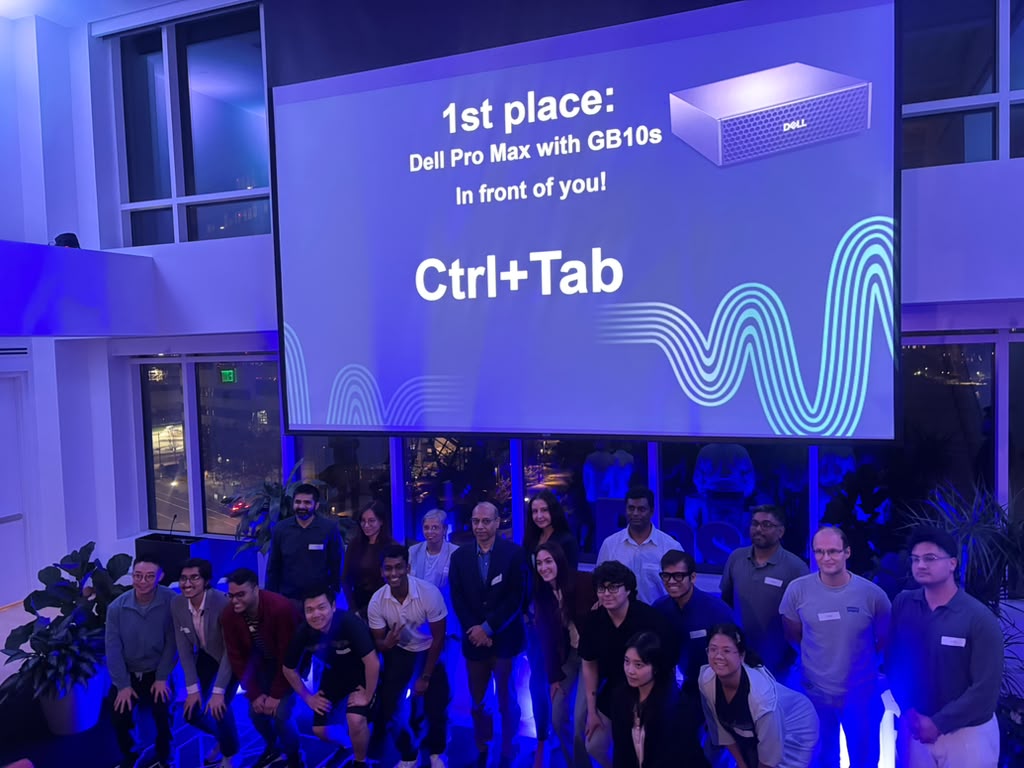
A human-in-the-loop triage and dispatch system for post-earthquake search and rescue, engineered end-to-end in a single day and placed first among 40 competing teams.
{{ p.line }}
Each square is a collapsed structure, shaded by graded damage. The queue orders rescue effort by survivor likelihood. Dashed squares have no life-sign reading, and they stay in the queue.
No signal never means nobody.
{{ tvShare }} of the answer comes from after year five. One more point of terminal growth, from here: {{ plusOne }}
Screens 600+ US-listed companies using SEC EDGAR XBRL data. Runs 11 models (5 bankruptcy, 6 earnings-quality and accounting red-flag, including Beneish M, Dechow F and Montier C) plus Piotroski F, producing a composite Health Score and an auto-generated earnings-quality risk card.
Download the Excel (all 600 companies) ↗{{ c.t }}
Lifeline is a human-in-the-loop triage and dispatch system for post-earthquake search and rescue, engineered end-to-end in a single day and placed first among 40 competing teams. It fuses Copernicus EMS structural damage grading with Maxar pre/post-event satellite imagery into a probabilistic survivor-likelihood score for every collapsed structure in the affected area, continuously re-weighted as new life-sign telemetry comes in. A constrained vehicle-routing layer built on Google OR-Tools converts that ranking into optimized multi-team dispatch plans, which a human commander reviews and authorizes over a live Telegram command channel.
The entire reasoning stack runs as local inference on a single Dell Pro Max workstation — no external API calls, no cloud dependency — and is engineered to communicate its own epistemic limits: every ranking is surfaced as a decision aid rather than a verdict, and the system is explicit about which inputs are live sensor data versus simulated for the demo.
{{ p.t }}
Consulting and analysis engagements delivered for real businesses. For internships and employment history, see .
{{ c.t }}
{{ m.t }}
{{ co.note }}
Illustrative profiles. The real scan runs on 600+ companies' SEC filings.
Download the full Excel ↗{{ a.t }}
Finance-focused experience across analytical, client-facing, and operational roles — the groundwork behind the finance-and-AI systems I build today.
The thread across all of them: turning messy inputs into reliable, decision-ready output — whether that's an equity-screening pipeline, a client proposal, or a day's cash reconciliation.
The strongest signal isn't the number of tools you know — it's whether a technical system connects to an actual risk decision. Each project below is framed that way.
For every one: the uncertainty it faced, the control I designed to bound it, the trade-offs that introduced, how I tried to break it — and when I'd distrust it, plus the safeguard I'd add next.
TL;DR: {{ c.tldr }}
{{ c.risk }}
{{ s.t }}
Ideas from building — AI systems, financial analysis, and what happens when you combine the two.
{{ para }}
42 Forage virtual job simulations plus 3 Forage short courses, 6 Coursera courses, and 2 IBM SkillsBuild credentials completed across banking, finance, consulting, technology, and business.
Click any credential to see what it covered. Those marked ✓ link to their certificate.
“He could take an objective, work through ambiguity, and deliver thoughtful, polished work without requiring constant supervision. As a founder, that level of reliability is something I value tremendously.”
{{ para }}
Sincerely,
Jason Sizer
Director, The 1525